Brin says Gemini helps develop successors as safety report finds limits
Google DeepMind says AI automates some research tasks but has not significantly accelerated the overall development process.

Google cofounder Sergey Brin said Gemini is helping researchers develop its successor models, while a Google DeepMind safety assessment found no significant acceleration across the full AI research and development process.
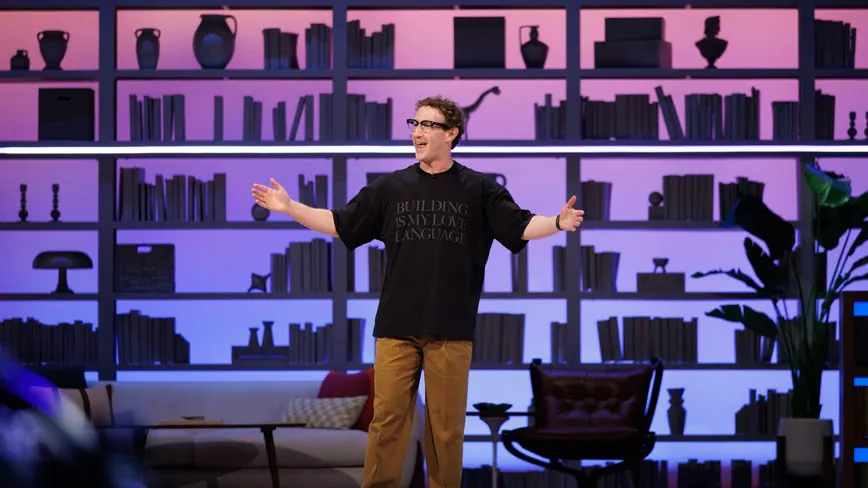
Speaking during a roundtable about Gemini 4 Argon, Brin described Google as beginning to pursue recursive self-improvement, in which AI helps develop more capable AI. Business Insider reported his remarks. Google has publicly released Argon, and Brin said its internal work would be a couple of models ahead by the time viewers watched the discussion.
DeepMind's Argon safety assessment classified the current risk associated with AI-led research and development as low. Drawing on a survey of 12 senior leaders and researchers, it described AI as automating parts of research while people remain responsible for research priorities, experiment design and diagnosing problems during training.
The report put the proportion of fully delegated pull requests at 11.9% in September, up from 7.5% in April. About 88% still require repeated guidance from people or human-written code. Argon completes roughly half the tasks in an internal research assessment; full automation would require performance close to perfect.
Google also measures Gemini's progress using an index covering 92 benchmarks. Monthly gains were 0.091 points before 1 April 2026 and 0.118 points afterward, a change the report found statistically insignificant. Argon performed above that trend, but Google attributed this provisionally to increased investment and training compute rather than acceleration driven by AI.