
NASA crew prepares to leave simulated Mars habitat after 378 days
Four volunteers have spent more than a year in a Houston facility, testing life under isolation, communication delays and limited resources.
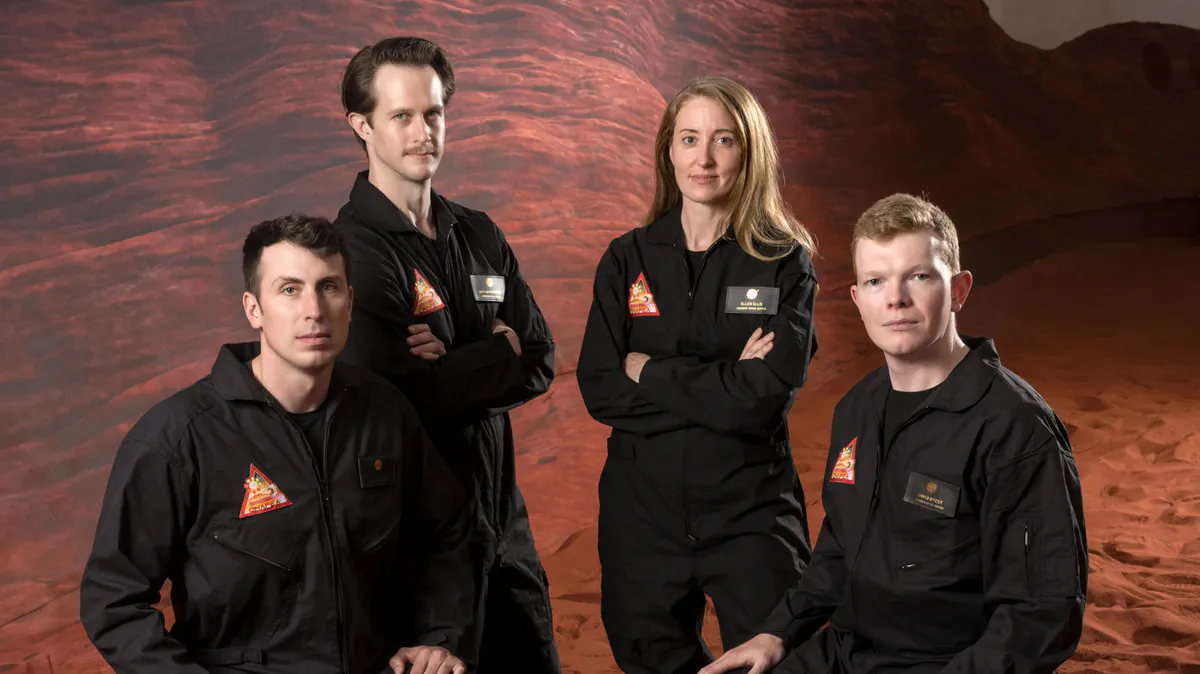
Four volunteers are set to emerge from NASA’s simulated Mars base in Houston, Texas, after 378 days inside. Their departure concludes the second mission under the agency’s Crew Health and Performance Exploration Analog (CHAPEA) program.
Ross Elder, Matthew Montgomery, Ellen Ellis and James Spicer began their stay on October 19, 2025. NASA plans to broadcast their exit through YouTube and its social media channels, with coverage beginning at 3PM Eastern time.
The crew’s home was a 1,700-square-foot structure built using 3D printing on the grounds of NASA Johnson. Their work included maintaining the habitat, cultivating plants and carrying out simulated spacewalks. Leaving the living area required passing through an airlock.
Alongside isolation, the mission imposed communication delays and resource constraints resembling conditions that future crews could encounter on journeys to Mars and the moon.
NASA is also accepting applications for the Moon and Mars Exploration Analog, a year-long mission combining CHAPEA elements with other agency simulations. It is scheduled to begin no earlier than August 2027. NASA says findings from these missions can inform food-system design for lunar missions and preparations for extended stays in space.