Mercury-bound X-ray telescope captures first astronomical observations
Tests using the Crab Nebula showed slightly sharper resolution than laboratory measurements in 2015, University of Leicester researchers found.
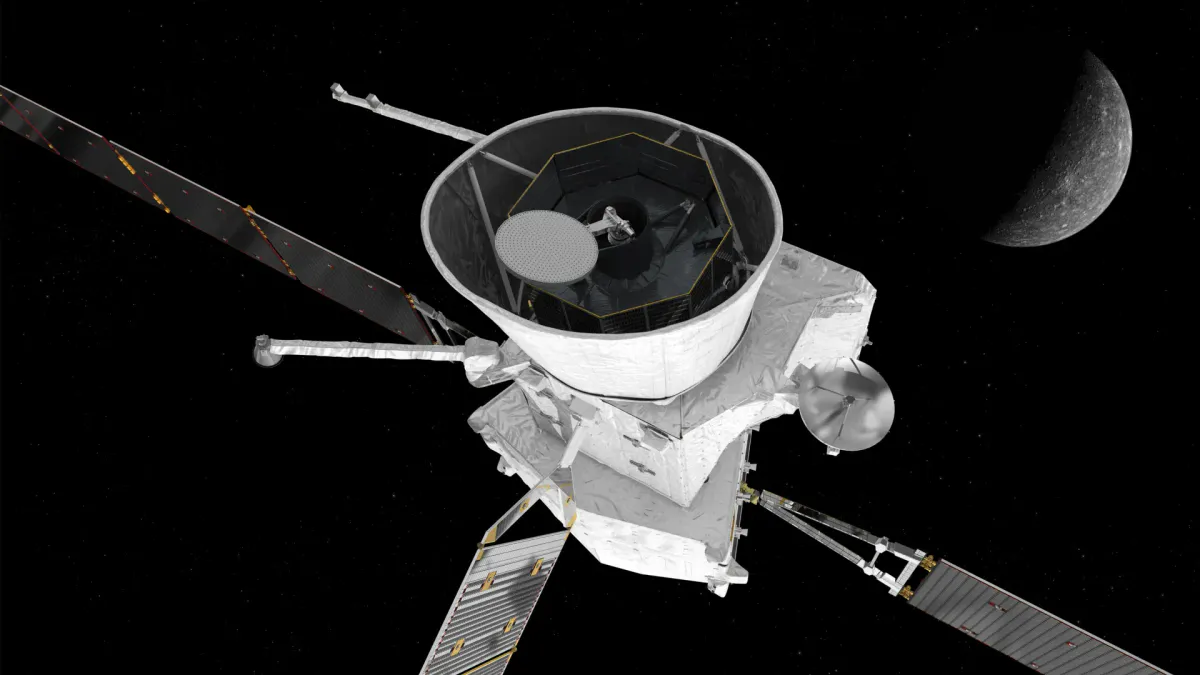
A UK-built telescope aboard BepiColombo has detected the Crab Nebula after traveling 10 billion kilometers over eight years. University of Leicester scientists are assessing the Mercury Imaging X-ray Spectrometer (MIXS) ahead of the mission’s scheduled entry into Mercury’s orbit on November 21.
The team collected observations on September 11 and 12, using 55 spacecraft orientation changes during a campaign lasting 39 hours. The Crab Nebula, approximately 6,500 light-years away, provided a predictable X-ray signal against which researchers could check the instrument’s performance.
MIXS principal investigator Professor Emma Bunce, who directs Leicester’s Institute for Space, said the detector showed no radiation damage. Researchers found slightly better angular resolution than in laboratory testing in 2015. Bunce said unwanted visible light was absent from the images and cosmic-ray effects could be filtered out.
Some instrument effects remain under investigation, and further adjustments are expected during commissioning at Mercury. Sunlight also produces some X-ray emission within the instrument, but Bunce said this would not affect measurements of Mercury’s sunlit surface.
Carried by the Mercury Planetary Orbiter, MIXS will help map surface elements by measuring the characteristic X-rays that rocks emit when exposed to solar X-rays. It will also study emissions triggered by charged particles striking the planet’s nighttime surface.
BepiColombo is a joint mission of the European Space Agency and Japan Aerospace Exploration Agency. Its two science orbiters are expected to separate on December 9 to 10, with the primary science phase scheduled for April 2027.