HomeView aims to simplify household tasks with Siri AI
Apple's US$299 home hub launches November 13, with personalized Siri features requiring a paired device that supports Apple Intelligence.
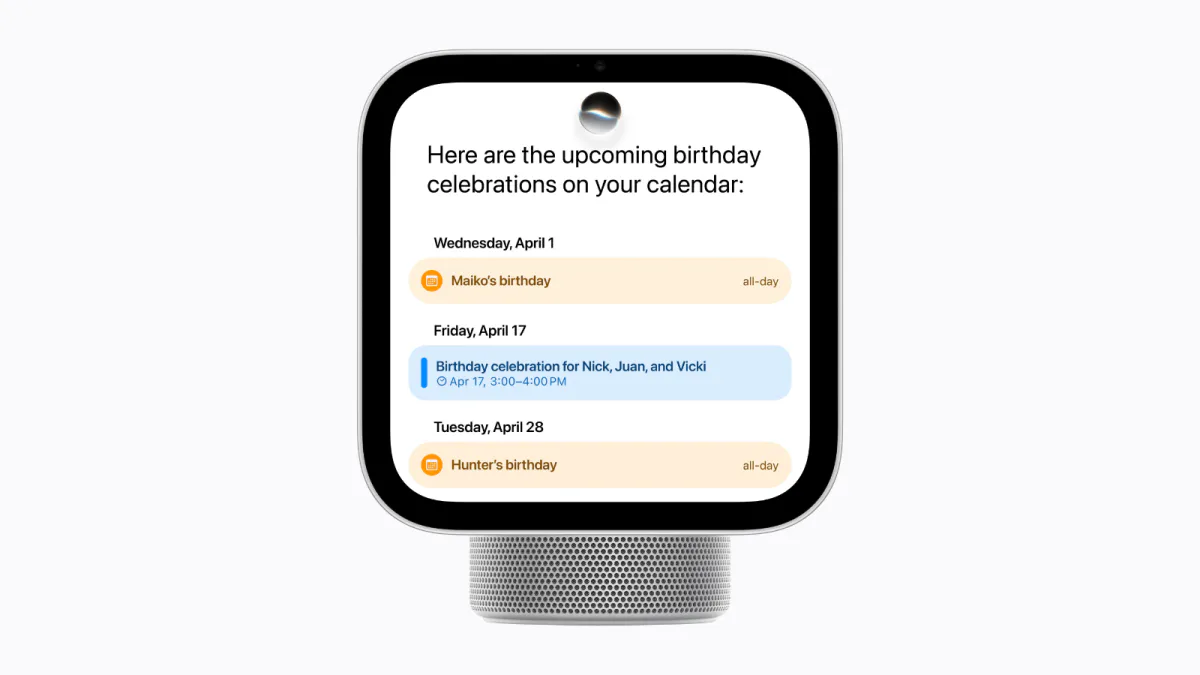
Apple wants its HomeView hub to handle household voice commands without repeatedly asking users for more information, executives told The Verge. They described an approach centered on everyday speech, with Siri AI carrying out tasks and then letting users move on.
The company unveiled HomeView on October 13 and will begin selling it on November 13. Buyers in the United States can choose either a tabletop model or a wall-mounted version, both priced at US$299.
Lilian Rincon, who leads Apple's AI product marketing as vice president, cited changing a thermostat's temperature as an example of a conversational request. She said accommodating the way different people speak could make the technology accessible to a broader audience.
Apple says the hub recognizes as many as six people, adjusting the information shown for each. Requests drawing on personal context depend on pairing it with an Apple Intelligence-capable device. Without a compatible iPhone or iPad, users can still ask general-knowledge questions, converse with Siri and access improved music discovery.
Kaiann Drance, Apple's home product marketing vice president, said personal context features and the company's privacy approach helped determine when HomeView was introduced.