
Brown team overcomes thin-film barrier in materials for low-power computing
Engineered bismuth ferrite layers also displayed altermagnetism, a magnetic state that could support faster, more compact computer components.
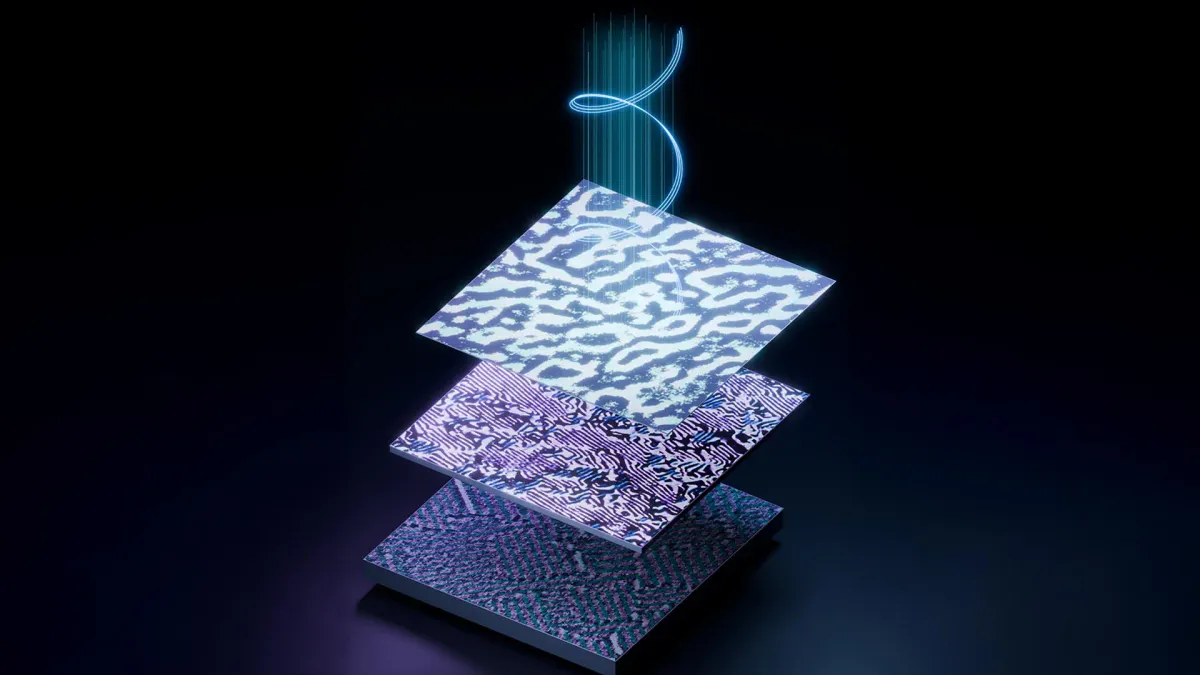
A Brown University research team has made bismuth ferrite layers just a few angstroms thick while preserving their ferroelectric and magnetic behavior, according to findings published in Nature Materials. The work tackles a limitation that has hindered the material’s potential use in energy-efficient computer chips.
The research was led by Lucas Caretta, an assistant professor of engineering at Brown. His team addressed the “dead layer” effect, in which thinning multiferroic materials disrupts their atomic structure and allows internal electric fields to undermine their electrical polarization.
To protect the structure, the researchers used dysprosium scandate as a base. Its slightly smaller crystal dimensions put the bismuth ferrite under compression. They also introduced a metallic layer to counteract electric fields that would otherwise disturb polarization.
The resulting films displayed altermagnetism as well. Caretta said this magnetic state could allow fast operation and closely packed components while providing a strong electrical readout signal, without the interfering stray fields associated with ferromagnets.
Multiferroics could offer a route to lower-power memory and logic because small voltages can reverse their electrical polarization to store digital information. Their linked magnetic behavior provides a way to retrieve that information. Caretta said the findings could advance practical applications, though additional development is needed before the technology can be used in commercial chips.