Astrolab proposes lunar power and 5G network with first deployment targeted for 2028
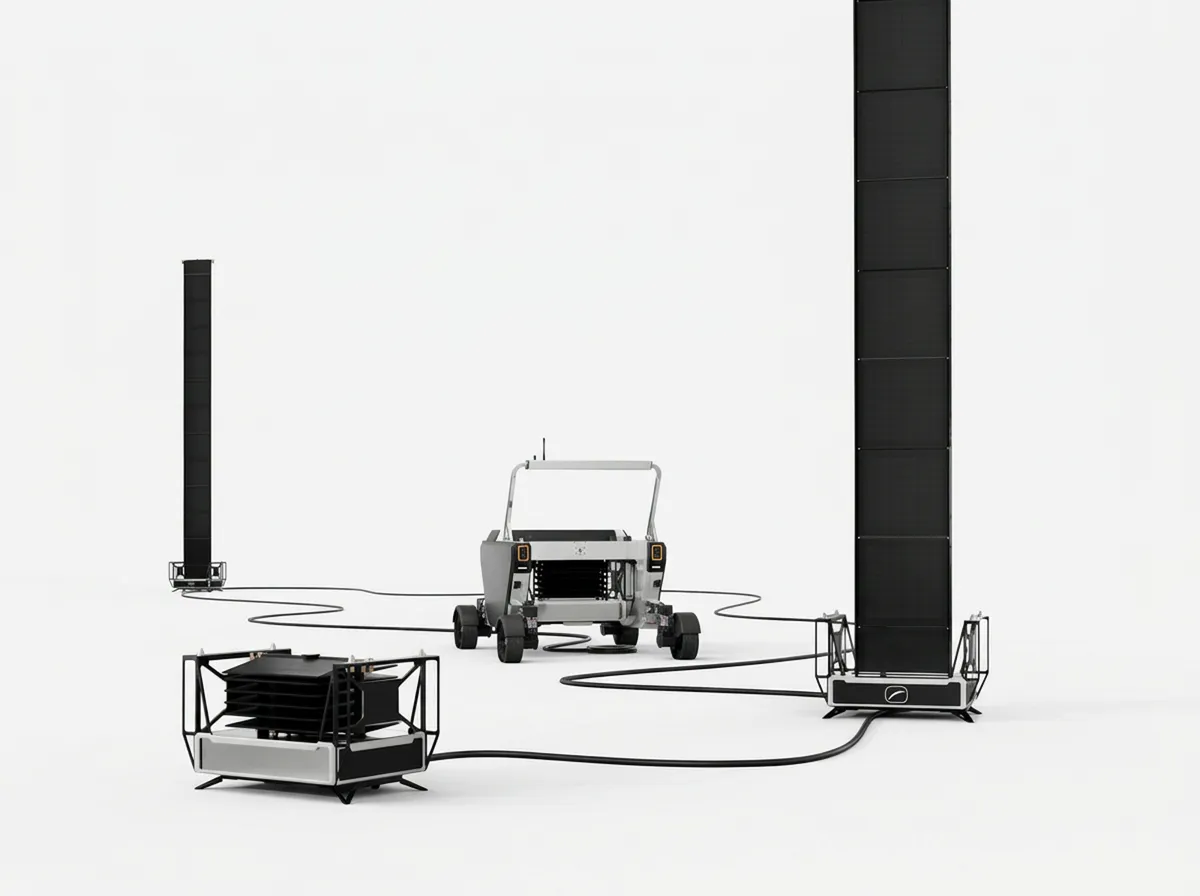
The proposed LUMIS stations would combine solar generation, communications and computing, with robotic rovers moving them to suitable locations.
US space technology company Astrolab is targeting 2028 for the first deployment of LUMIS, a proposed system supplying lunar equipment with power and connectivity. Announced on 4 November, the project would provide computing services alongside Wi-Fi and 5G connections.
Astrolab plans to begin with demonstration nodes designed for 2 kW of generation. Later versions could produce 20 kW apiece, while linked installations are envisaged to deliver more than 100 kW. The company says stations could run on internal reserves for more than 400 hours while still supplying external equipment.
Rather than leaving stations at their landing locations, Astrolab proposes using its FLEX robotic rovers to carry them to sites with better access to sunlight and communications. Each station would include batteries, vertical solar arrays, antennas and computing hardware. Proposed relay connections would extend beyond 100 kilometres to serve locations without direct contact with Earth.
The planned first deployment would travel on a commercial FLEX mission aboard SpaceX's Starship. Astrolab also envisages a shared system called Lunar Operating System, or Lunar OS, through which future missions could obtain electricity and communications instead of supplying all their own infrastructure. The capabilities remain proposals; the network is not operational.