Meta plans to expand Ohio AI supercluster to about 1 million GPUs
The company says Prometheus has completed its first phase and was used to train models in its Muse family.
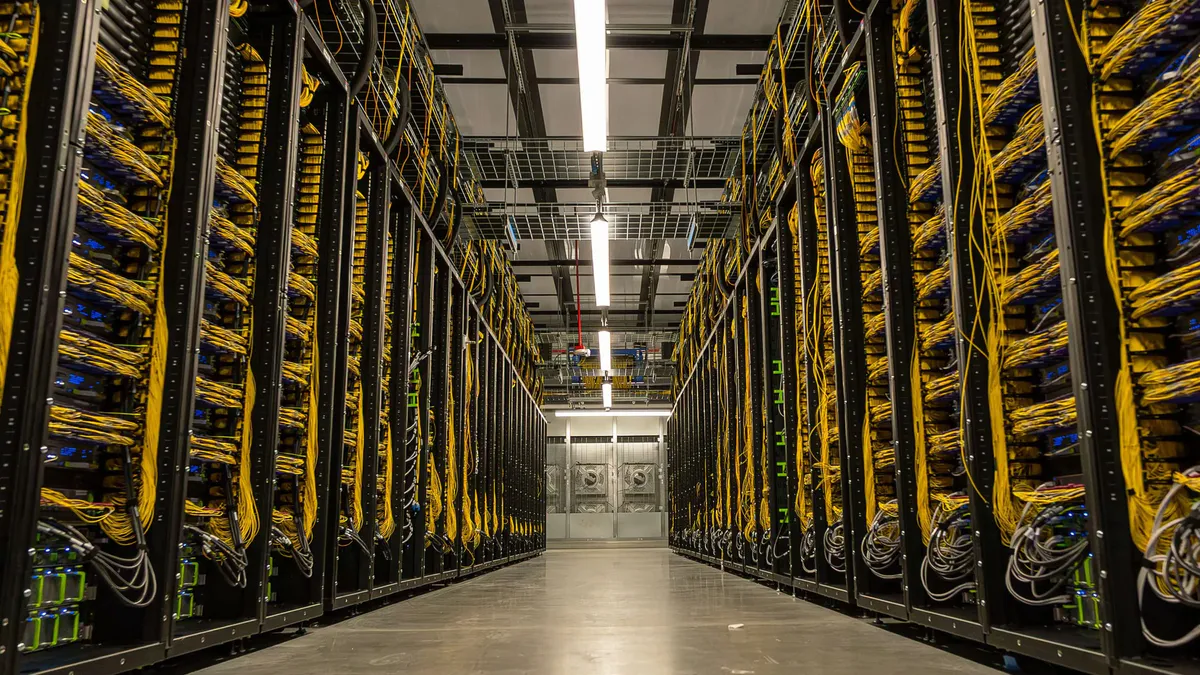
Meta plans to expand Prometheus, its AI computing cluster in New Albany, Ohio, to about 1 million GPUs. Hundreds of thousands of Nvidia GPUs are already operating across multiple buildings, the company said in an engineering blog post.
The company said the gigawatt-scale cluster’s initial phase is complete and has supported training for its Muse model family, including Muse Wonder. The site handled web traffic as a conventional data center two years ago.
The installation currently uses Nvidia’s GB200 NVL72 and GB300 NVL72 systems, with Vera Rubin NVL72 racks planned for a third platform. Fiber links connect equipment housed in conventional data centers, buildings optimized for AI and rapid-deployment structures. Meta also leases computing capacity from partners.
Reliability was an early challenge, according to Meta. Interruptions reached nearly 1,000 events per 8,000 GPUs daily in mid-2025, before a year of engineering changes reduced that figure by 99%. Signal quality across more than 600,000 NVLink connections was initially the largest problem; memory faults grew more significant as GB300 deployment expanded.
Meta said Muse Wonder training averaged about 47,000 GPU hours between interruptions. Firmware fixes have since pushed that measure above 54,000, against a goal of about 100,000. To maintain reliability, each rack uses 64 of its 72 GPUs and retains eight as spares.
Coordinated computing activity can change electricity demand by 30% to 40%, Meta said. Its Dynamo Dimmer software gradually limits GPU power, supported by batteries at multiple levels. The company said lessons from Prometheus are informing the design of Hyperion, its next supercluster in Richland Parish, Louisiana.