
Laser experiment produces fleeting electrical alignment in crystal
Auburn University scientists say their measurements also help explain how cooling brings order to microscopic electrical regions.
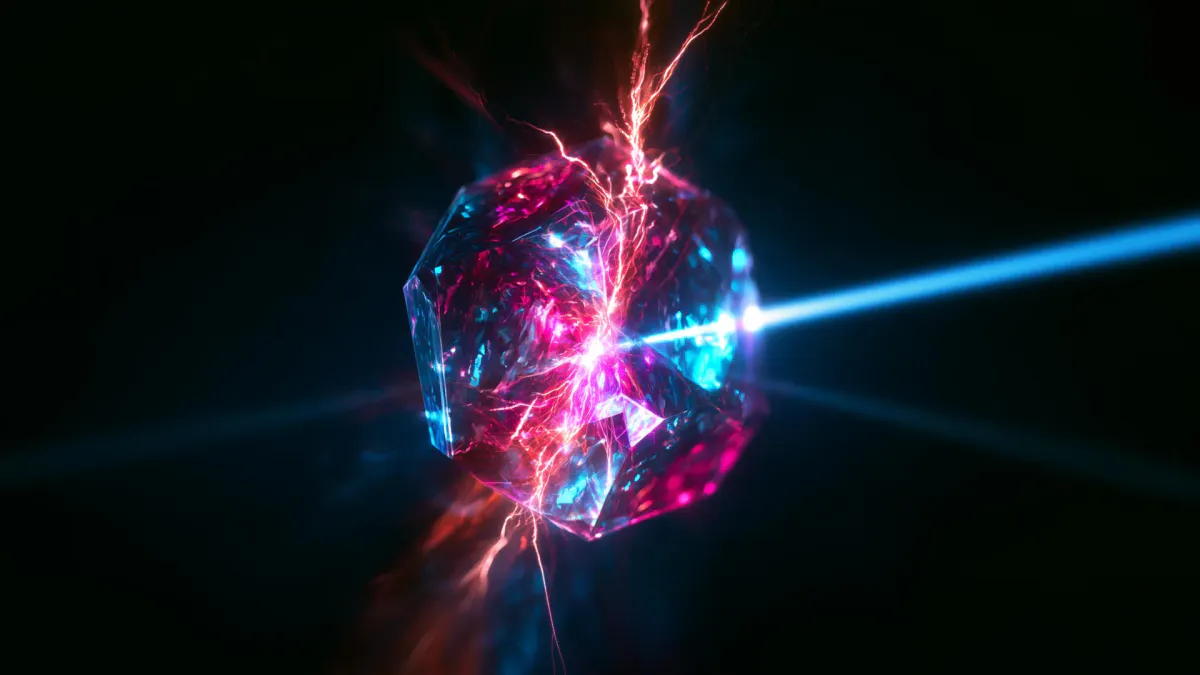
Brief laser flashes brought microscopic electrical regions into alignment inside a modified strontium titanate crystal, Auburn University researchers reported. The effect lasted approximately one picosecond and occurred at temperatures where those regions would normally point in different directions.
The material conducts electrons but also holds tiny areas with distinct positive and negative sides, called polar nanoregions. Researchers have debated whether electrical order arises when atoms move collectively or when existing regions turn toward a common direction. The Auburn team's findings support the latter explanation.
To follow those changes, the scientists measured how the crystal affected incoming light as they heated and cooled it repeatedly. Warmer conditions produced apparently random orientations, while cooling led the regions to favor certain directions. Optical measurements also detected the temporary order created by laser pulses. The experiments offer a way to study rapid electrical behavior, though applications in information processing and storage remain possibilities.
Wencan Jin, an associate professor in Auburn's Department of Physics, led the work with graduate student Mohamed Kandil. Their findings appeared in Physical Review Letters. The crystals came from Japan's National Institute of Advanced Industrial Science and Technology. According to Jin, Kandil observed the light-induced ordering in 2025.