
Chinese team sets 3.2 Pbps record for real-time fiber transmission
The result surpassed the group's earlier 2.5 Pbps mark and counts traffic moving in both directions simultaneously.
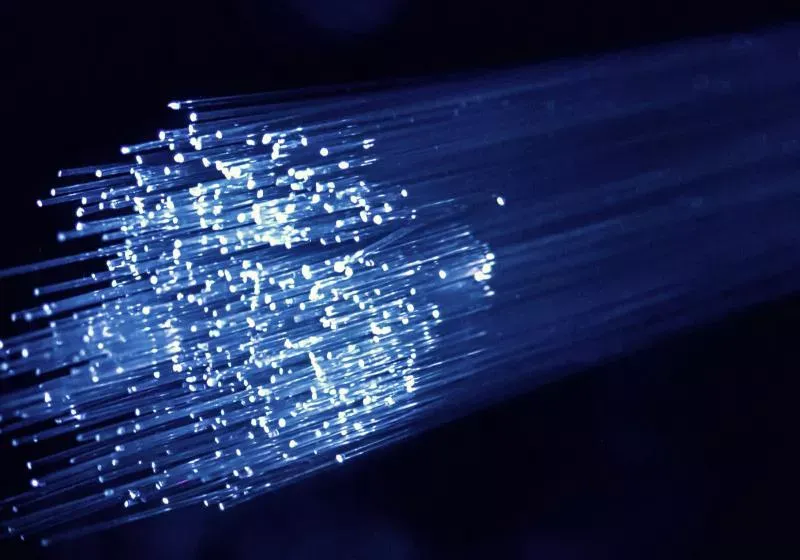
Researchers in China have achieved a real-time fiber-optic transmission record of 3.2 petabits per second (Pbps), using a single fiber with 24 cores across 10.3 km. The reported speed includes data sent in both directions at once.
Participants included Peng Cheng Laboratory, FiberHome Fujikura and CICT's National Key Laboratory of Optical Communication Technologies and Networks. Their design distributed the optical signal among thousands of channels running in parallel, using three wavelength bands.
Rather than relying on outside optical modules, the group built its own, targeting real-time transmission that could satisfy current commercial standards. Experiments with comparable 24-core fibers have produced faster results, but those tests required experimental hardware and signal-processing devices.
According to the researchers, the capacity could theoretically meet gigabit broadband demand from 3.2 million households. They also suggested that petabit-level links may become essential for AI, as growing traffic from new AI data centers brings single-mode fibers closer to their capacity limits.
Other possible uses include connecting large computing facilities and supporting 6G backbone networks. The research was chosen for the 2026 Optical Fiber Communication Conference, and the team received an invitation to publish its results in a scientific journal.