
Nvidia unveils Rubin HPC for AI-driven scientific simulation
The GPU is expected in 2028 with more than 50,000 CUDA cores, while memory specifications and its physical layout remain undisclosed.
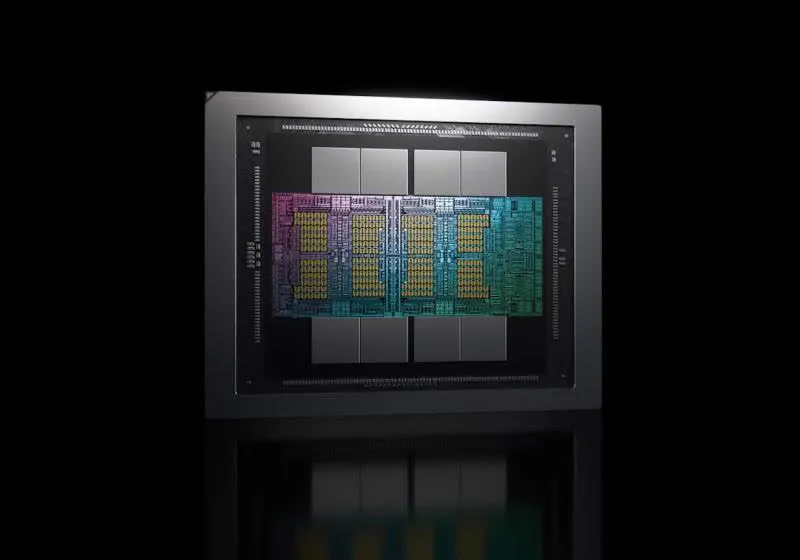
Nvidia has announced a new addition to its Vera Rubin platform aimed at scientific simulations launched by AI agents. Called Rubin HPC, the GPU is expected in 2028 and will have more than 50,000 CUDA cores, the company said at Supercomputing 2026.
The company has not specified how much HBM memory the processor will carry, its memory bandwidth or whether it will devote more silicon to native FP64 calculations. It also has not confirmed whether the GPU will contain multiple dies. GPU connections will rely on seventh-generation NVLink, although Nvidia disclosed no bandwidth figures for it.
Nvidia says the design will increase data movement alongside computing capacity to reduce the time cores spend waiting for information. A sparse data acceleration capability is intended to speed recurring simulation tasks, including sorting, reductions, sparse matrix operations and stencil computations.
The company is targeting applications including genomic analysis, climate modeling, financial risk work and engineering simulation. It argues that AI agents will enable researchers to screen more candidate materials, molecules and designs, each requiring simulation before physical experiments or prototypes.
For software, agents using Rubin HPC will have access to Nvidia's CUDA-X libraries. These contain optimized implementations of algorithms used for analytics and simulation.