
Balloon observatory detects fine magnetic threads above quiet areas of the Sun
Computer simulations suggest that surface movements twist magnetic fields into the narrow structures observed higher in the solar atmosphere.
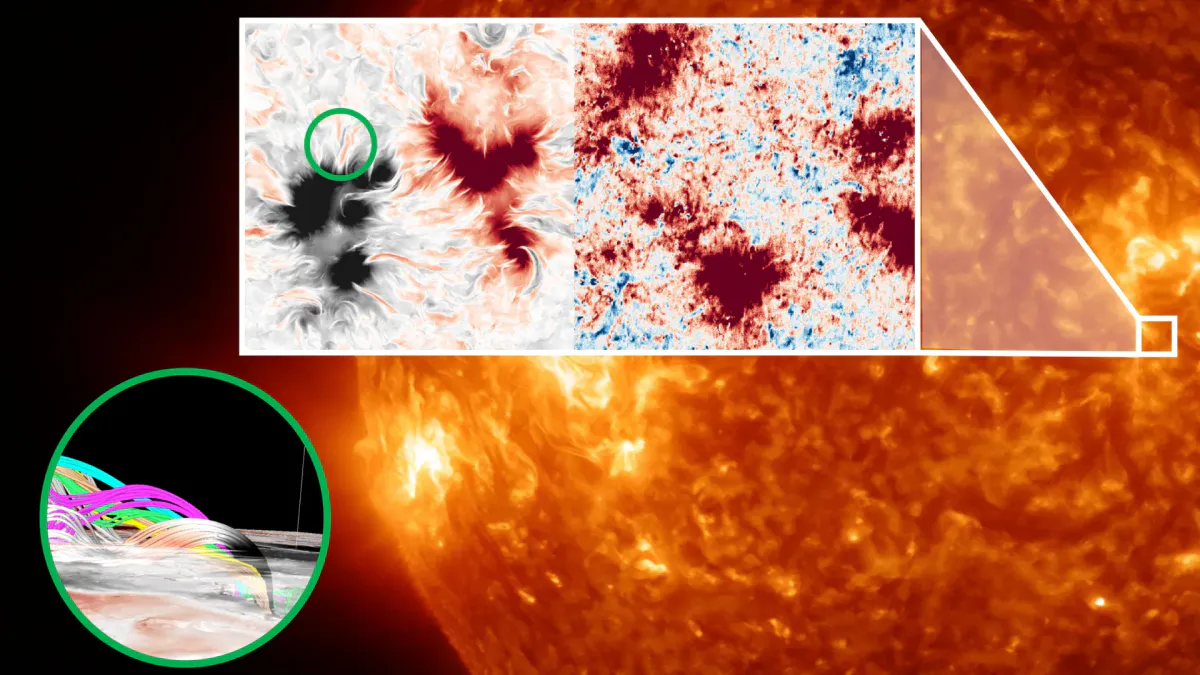
An international team led by the National Astronomical Observatory of Japan (NAOJ) has identified thin magnetic threads above apparently calm areas of the Sun. The researchers used measurements gathered during the Sunrise-III balloon observatory's 2024 mission to examine a network whose fine structure had been difficult to detect.
The observations showed narrow features within the magnetic canopy, a network formed as fields spread outward from the visible solar surface into the chromosphere above it. Rather than expanding smoothly, the canopy contained numerous elongated structures. Computer simulations reproduced the observed patterns, suggesting that surface movements twist the magnetic field lines.
Sunrise-III also measured magnetic fields in spicules, slender jets of solar material, near the Sun's visible edge. Those measurements revealed changes in the distribution of magnetic fields at different heights.
The observatory carried a 1-meter telescope to approximately 35 kilometers above Earth, reducing the atmospheric interference that blurs observations from the ground. Among its three scientific instruments was SCIP, a near-infrared instrument developed under NAOJ's leadership to measure magnetic fields across multiple solar layers.
Quiet regions occupy most of the Sun's surface but have weaker magnetic fields than more active areas, making their details harder to measure. The findings could help researchers investigate how motion near the surface transfers energy upward and how magnetic activity helps heat the solar atmosphere.