Webb data point to possible atmosphere on scorching lava planet
Climate models suggest silicate clouds could form over TOI-561 b’s dayside and reflect radiation before it heats the surface.
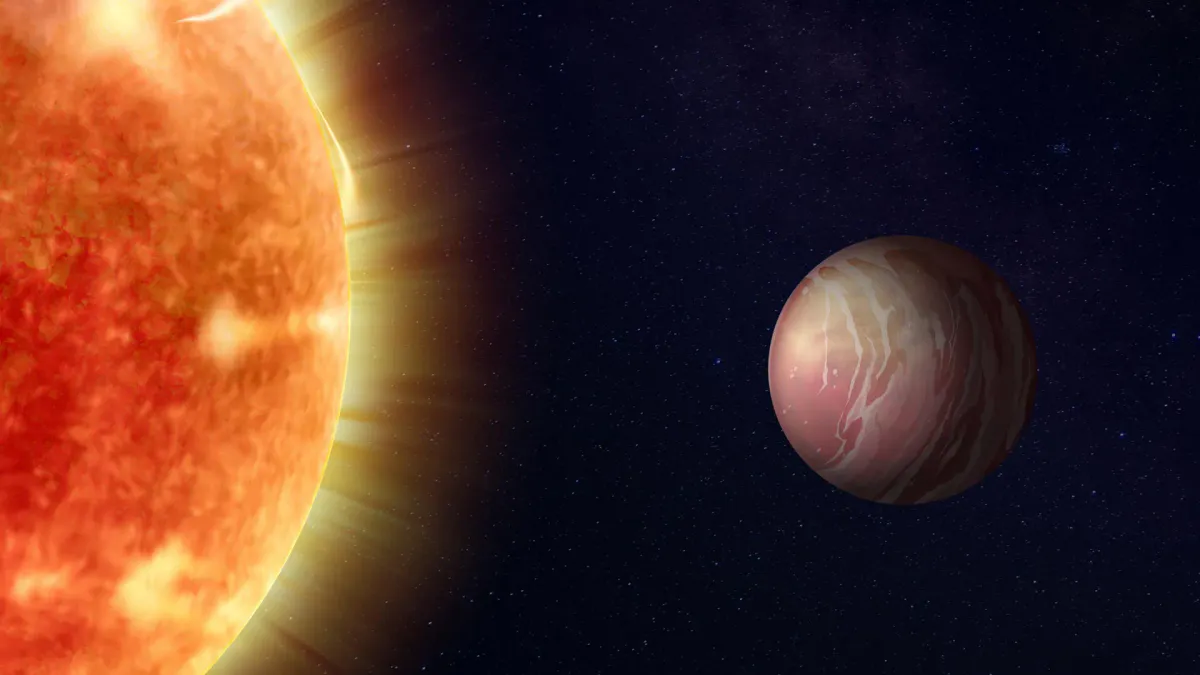
Astronomers studying TOI-561 b with the James Webb Space Telescope have found evidence of an atmosphere despite the rocky planet’s intense exposure to stellar radiation. Their measurements indicate that approximately 75% of the starlight reaching the planet is reflected into space.
The planet lies approximately 280 light-years from Earth. Researchers monitored it across nearly four orbits during 37 hours of observations. Professor Lisa Dang of the University of Waterloo in Ontario, Canada, led the international project, whose findings appeared in The Astronomical Journal. University of Birmingham astrophysicist Dr. Anjali Piette was among the researchers.
The team investigated why earlier measurements had found the permanently illuminated hemisphere cooler than expected. Observing the unlit hemisphere for the first time showed that it was not warm enough for heat redistribution alone to explain the lower dayside temperature.
Computer simulations offered another possible explanation: reflective clouds of silicate minerals may develop above the dayside. Such clouds could intercept radiation before it warms the surface. The researchers have not established the atmosphere’s composition, but carbon dioxide and sulfur dioxide are possibilities. Conditions remain too hostile for life as currently understood.
Piette said the evidence challenges expectations that intense irradiation would have removed the atmosphere billions of years ago. Gases released from the planet’s molten interior may replenish it, the team suggests. The researchers hope further Webb measurements at longer wavelengths could clarify its chemistry and help explain how an atmosphere could persist.