
Kobe University team develops pigment-free coating with adjustable gloss
The researchers demonstrated color on large, three-dimensional surfaces and found that a protective layer caused little change in its appearance.
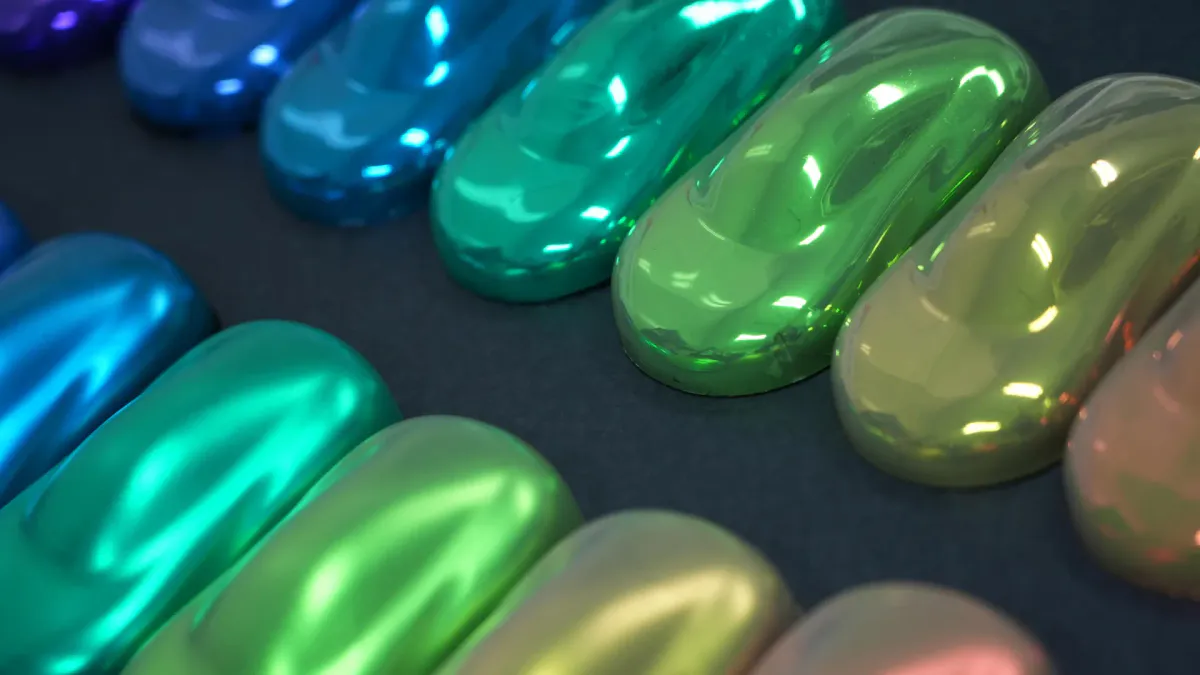
A team at Kobe University has demonstrated a way to give large, three-dimensional objects glossy color without pigments while keeping their hue consistent as viewing angles change. The findings, reported in Small Structures, also showed that a protective coating barely affected the color.
The technology uses tiny silicon spheres to produce structural color. Earlier versions developed by materials engineer Hiroshi Sugimoto maintained consistent hues but lacked gloss because they scattered reflected light in multiple directions.
Enclosing the particles in silica shells protects them and controls their spacing, which should help them arrange themselves more uniformly, Sugimoto explained. A more orderly arrangement reduces light scattering. The researchers demonstrated that they could vary the resulting gloss.
The team found that one layer of silicon nanospheres can create bright, opaque color that conceals the surface beneath it. The researchers estimate that their technology could provide an aircraft color coating weighing several hundred grams, compared with the several hundred kilograms added by conventional coatings on wide-body airliners.
Sugimoto is helping set up a company to expand production for industrial customers. He also aims to develop silicon nanoparticle coatings that combine color with other functions, including sensing, light-driven chemical reactions and energy management.