Researchers 3D-print interlocking bricks from simulated Moon dust
The binder-free method could support future lunar construction, but the experimental blocks remain too weak for demanding structural uses.
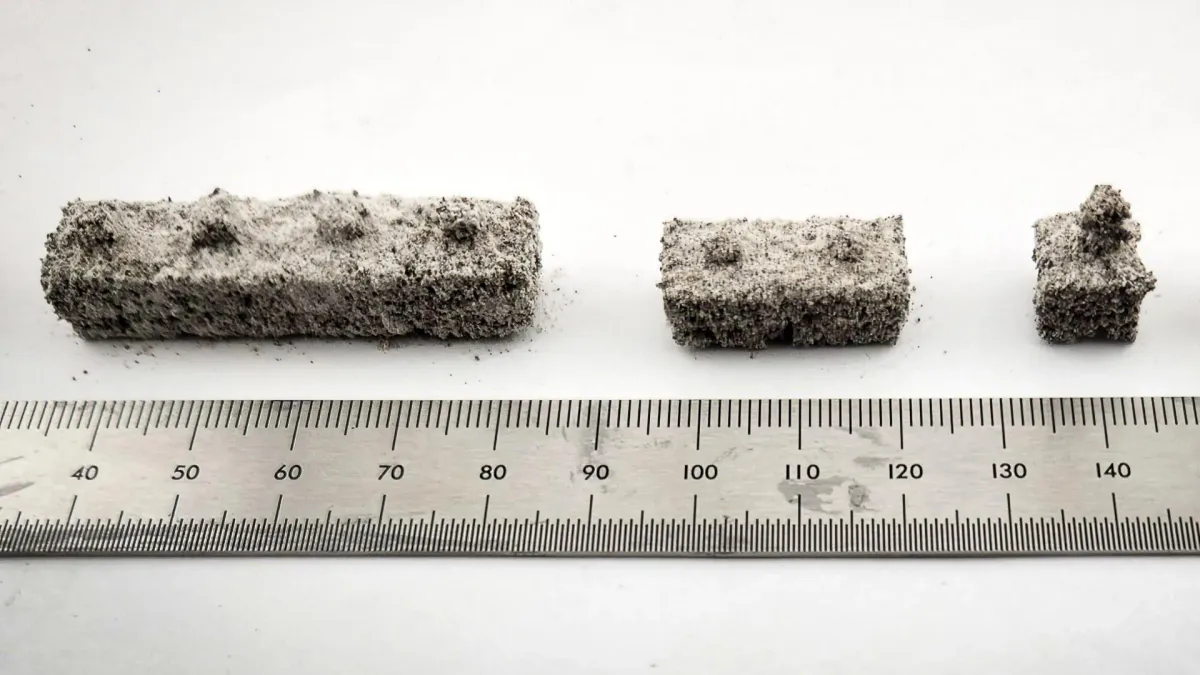
University of Arkansas researchers have made small, interlocking construction blocks by fusing a substitute for lunar soil without added binding materials. The team said the technique could eventually help produce building supplies on the Moon, though strength and operating conditions remain obstacles.
Published in NPJ Advanced Manufacturing, the study used Lunar Highlands Regolith Simulant (LHS-1), a commercial material modeled on samples returned by NASA's Apollo missions. Cole McCallum, an undergraduate when the work was conducted, was first author; mechanical engineering assistant professor Wan Shou was senior author.
The researchers employed laser powder bed fusion, using concentrated light to join powder particles through heating. Successive layers formed solid objects, including cross-shaped and H-shaped bricks a few centimeters across. Their shapes allow separate pieces to connect and be rearranged.
Earlier approaches used binders that would have to be transported from Earth. Eliminating those additives leaves the simulated soil particles bonded to one another, but the resulting blocks have more pores and less strength than objects made with binders. McCallum said the pieces could support themselves, while cautioning against using them to carry additional loads at this stage.
Shou said further research must establish how the process works in a vacuum and under lunar gravity. The finished components also need greater strength and durability before they can be considered for construction on the Moon.