Lumina simulation models the universe’s first 2 billion years
Researchers used more than 15,000 graphics processing units to model how matter and radiation interacted as early galaxies developed.
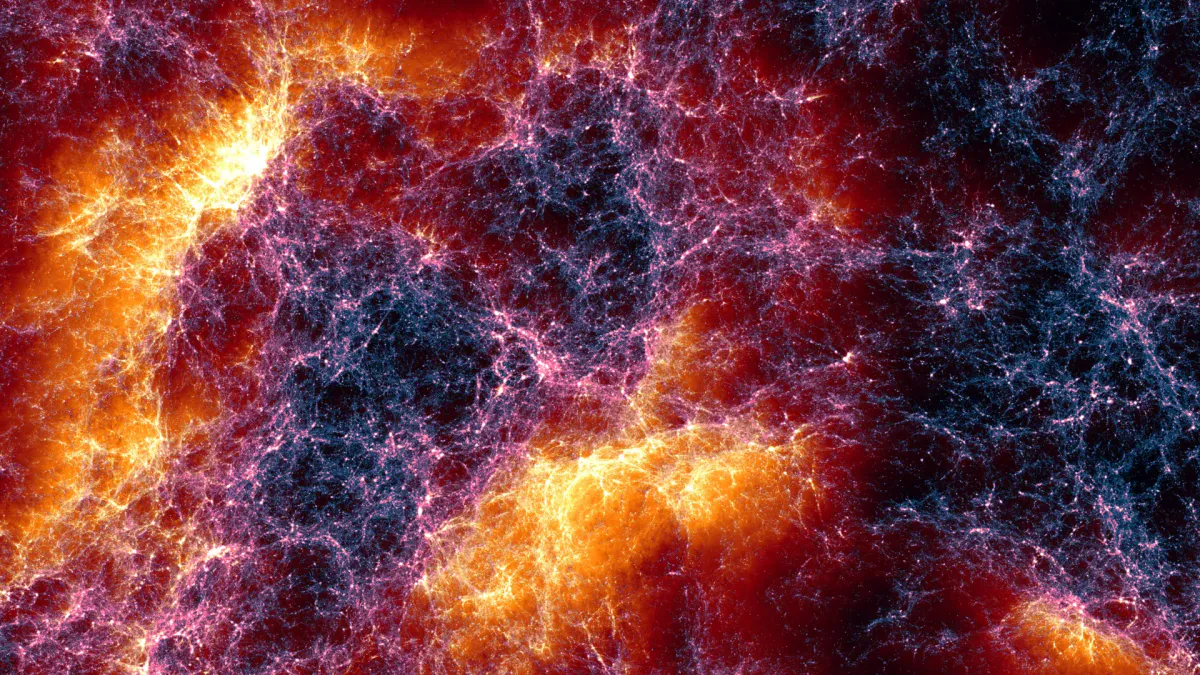
Researchers at the Center for Astrophysics | Harvard & Smithsonian have developed Lumina, a computer simulation covering the first 2 billion years after the Big Bang. The project is intended to help astronomers test theories of cosmic evolution against telescope observations.
The research, published in Monthly Notices of the Royal Astronomical Society, models interactions among ordinary matter, dark matter and radiation. Its simulated region is a cube with sides approximately 1.5 billion light-years long, covering more than 100 times the volume of earlier comparable projects.
The team ran the simulation using more than 15,000 graphics processing units on the Frontier supercomputer at Oak Ridge National Laboratory in Tennessee. The computing resources allowed it to examine individual galaxies while also following changes across a much larger region.
Lumina also tracks helium reionization—the removal of electrons from helium atoms by radiation—and accounts for its effects on surrounding material. Researchers plan to investigate gas moving between galaxies, radiation remaining from the Big Bang and regions with especially high rates of star formation.
Comparisons with observations from instruments including the James Webb Space Telescope and Nancy Roman Space Telescope could help researchers identify where existing theories fit the evidence and where they may need revision.