Kioxia and Nvidia test SSD-based expansion of GPU-accessible memory
The experimental rack uses 144 drives to provide around 1.1 petabytes of raw storage capacity, according to Kioxia.
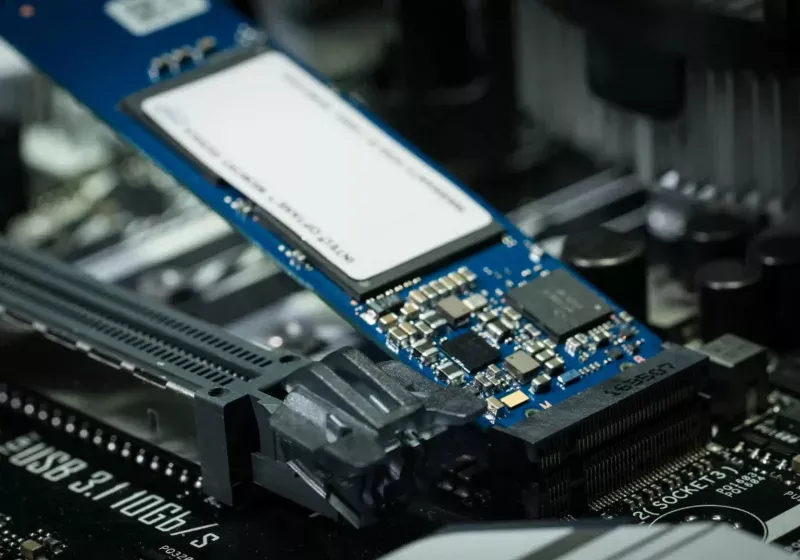
Kioxia and Nvidia are testing a system that makes enterprise SSD capacity directly accessible to GPUs, aiming to expand memory beyond the limits of onboard high-bandwidth memory. The proof of concept connects 144 Kioxia drives in an Nvidia GB200 NVL72 rack, providing around 1.1 petabytes of raw SSD capacity, according to Kioxia.
The configuration uses 7.68 TB NVMe drives from Kioxia's XD8 Series. Its 18 server nodes each accommodate eight E1.S SSDs, giving each node around 60 terabytes of flash-based memory. Nvidia's SCADA software stack makes that capacity directly available to the GB200 GPUs.
Kioxia said the setup supports access to data in 512-byte units, potentially accommodating 2 trillion vectors of that size. Possible applications include managing and processing large vector databases and the datasets used by graph neural networks.
The companies described the system as a proof of concept that remains under testing. Kioxia is also developing storage intended to extend memory capacity beyond HBM chips. Its recently introduced GP1 Series is designed around PCIe 6.0 to improve direct GPU access, while the companies continue evaluating approaches using SCADA and the Storage-Next architecture.