Bennu samples suggest its ingredients mixed near the early Solar System’s ice line
An ETH Zurich study links Bennu’s chemistry to Ryugu and rare meteorites, suggesting Jupiter may have influenced how their ingredients came together.
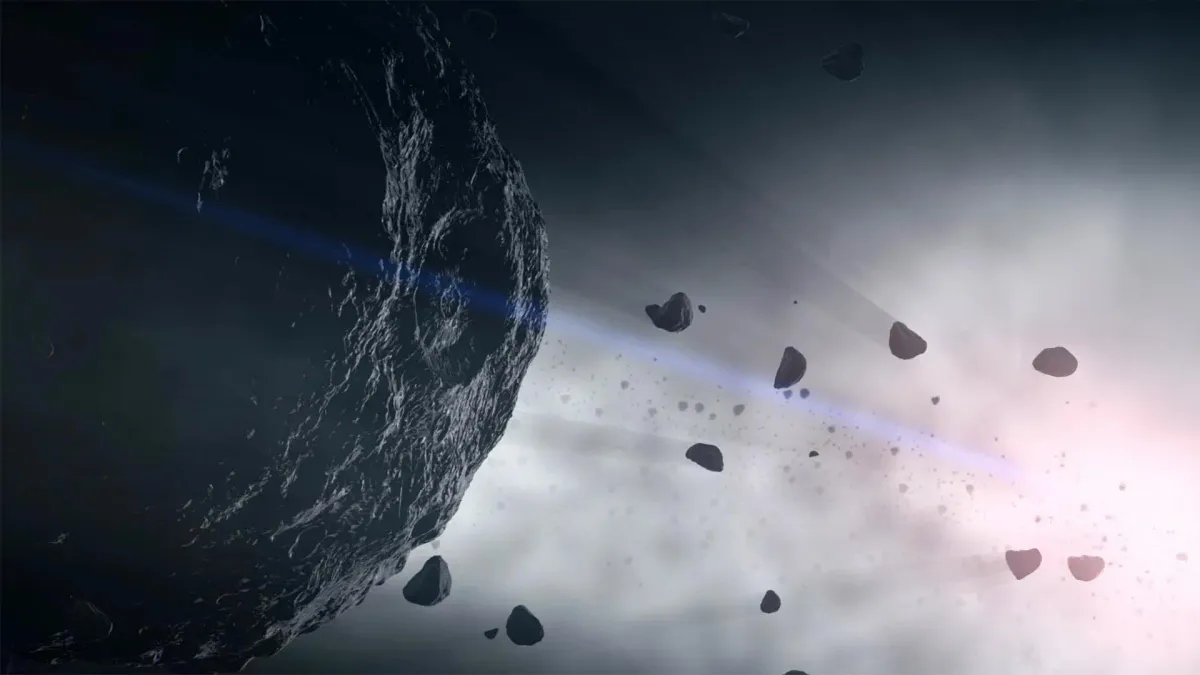
Material returned from asteroid Bennu points to an origin near the young Sun’s water-ice boundary, rather than in more distant regions, researchers at ETH Zurich propose. Their study, published in Science Advances, suggests Jupiter may have helped mix the dust that supplied Bennu’s ingredients.
The team examined different forms, or isotopes, of iron, titanium and chromium in samples delivered to Earth by NASA’s OSIRIS-REx mission in 2023. The laboratory of Maria Schönbächler, Professor of Isotope Geochemistry at ETH Zurich, received half a gram for its research.
The measurements showed close isotopic similarities between Bennu, asteroid Ryugu and a rare class of carbon-rich meteorites called CI meteorites. The researchers say those patterns suggest the objects drew their ingredients from a shared dust reservoir. Bennu’s composition indicates a mixture of material from the Solar System’s inner and outer regions.
In the team’s proposed explanation, the growing Jupiter blocked most larger particles from passing through its orbital region while finer dust could still travel around it. That dust could mix near the boundary where water vapor froze, with ice helping particles gather into larger bodies.
The scenario could also account for Bennu’s water-bearing material and its chemical similarity to the Sun, the researchers suggest. Further samples could test whether other asteroids share the same isotopic pattern. Questions remain about precisely how Jupiter affected dust movement and whether it favored the accumulation of fine particles.